de-app

Context

According to statistics, 7 out of 10 people in EU have to wait more than 48 hours to receive public medical attention.

The main actors who can inform the patient are the pharmacist and the primary care (AP), as they are the first point of contact before reaching the specialist and being diagnosed and treated.

Opinno health solutions has been part of ‘Federated Artificial Intelligence Network Project’ to accelerate health research. 

Supported by pharmaceuthical sector and health organizations born the idea to create a solution from scratch to empower health services online.

Problem scope

Awareness among the first points of contact with patients, such as pharmacists and primary care. Cover the gap with usefull information and after that provide the best specialist.


The main needs identified are:


  • Streamlining the referral process to the specialist, which is currently complex.

  • Patient misinformation about the condition; the patient is often unaware that they have a problem that will be solve with treatment.

  • Identify patient journey to provide usefull information, ensuring the patient find a provider to be diagnosed and treated.

Prioritize features

Items of the highest priority should be placed first, and moderate-priority items should be moved to the middle, and items of the lowest priority should be placed in the end of the list.

Benefits-table

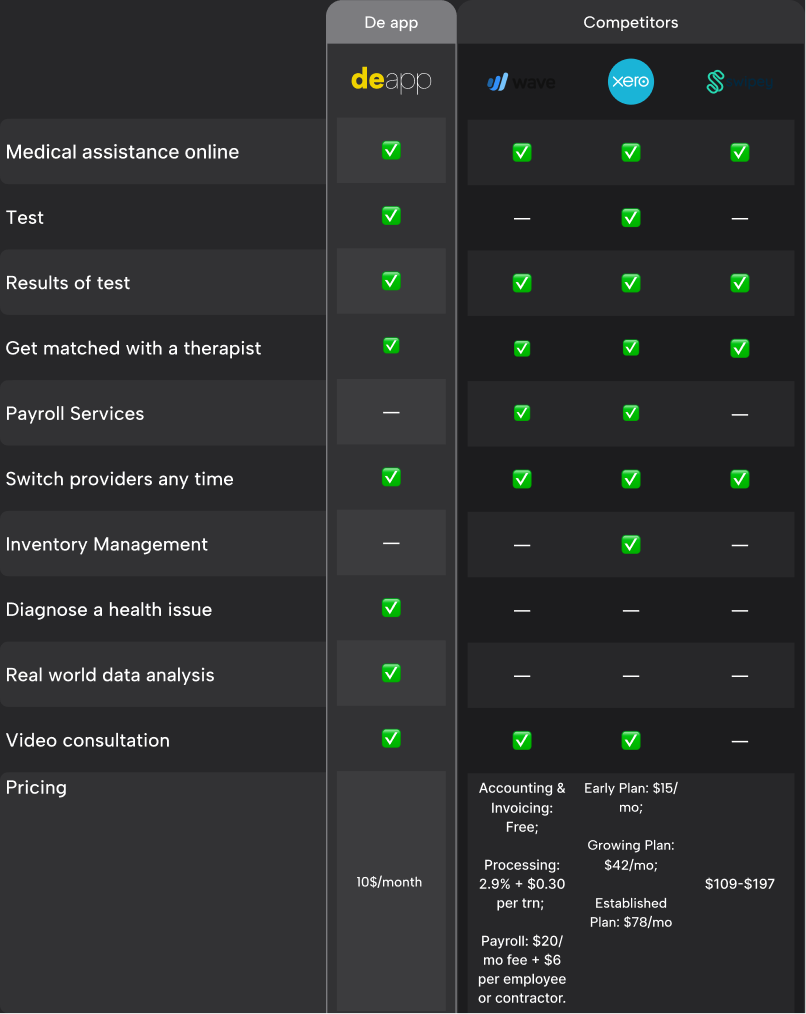
Benchmarking competitors

Benchmarking data helps to set realistic, data-driven goals and expectations. It ensures that targets are not only ambitious but also achievable, based on what is happening in the industry or within your specific market.


bench-competitors

Time to roll up our sleeves

To validate and refine the solution during the discovery phase, we conducted:


  • 20 in-depth expert interviews:

    • Assess pain points in current patient pathways

    • Validate the proposed solution’s feasibility

    • Identify critical friction points in referrals and treatment adoption

  • 6 exploratory interviews with telemedicine providers.

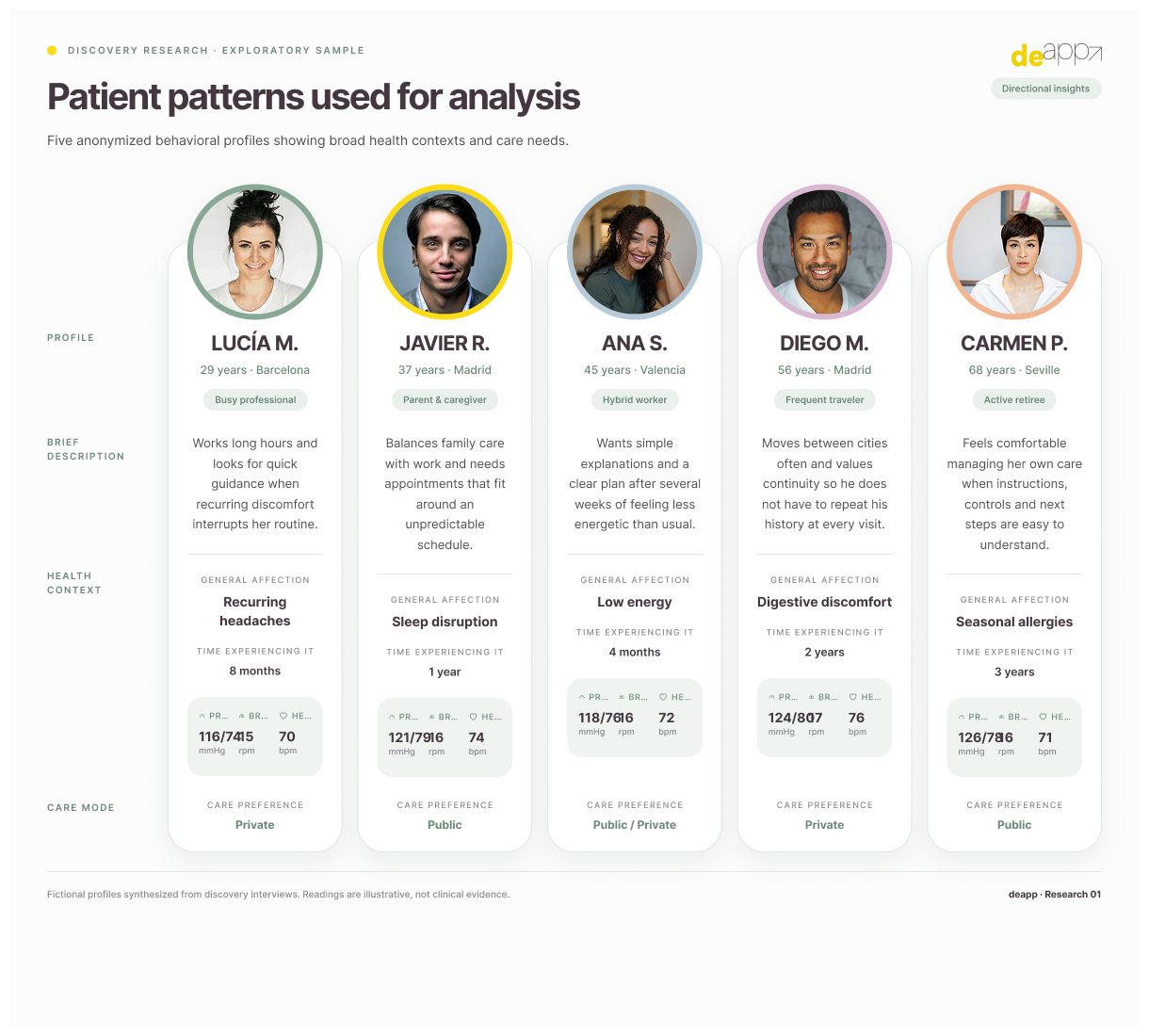
  • 5 in-depth interviews with patients of different affections.
deck-ux-research

User Journey for pre-diagnosis

Obtain pre-diagnosis with DEapp is the fastest way to get an information based on symptoms.

1. Pre-connect:

  • Mapped the end-to-end patient journey (from first symptoms to treatment) identify process.

2. Pre-diagnosis test:

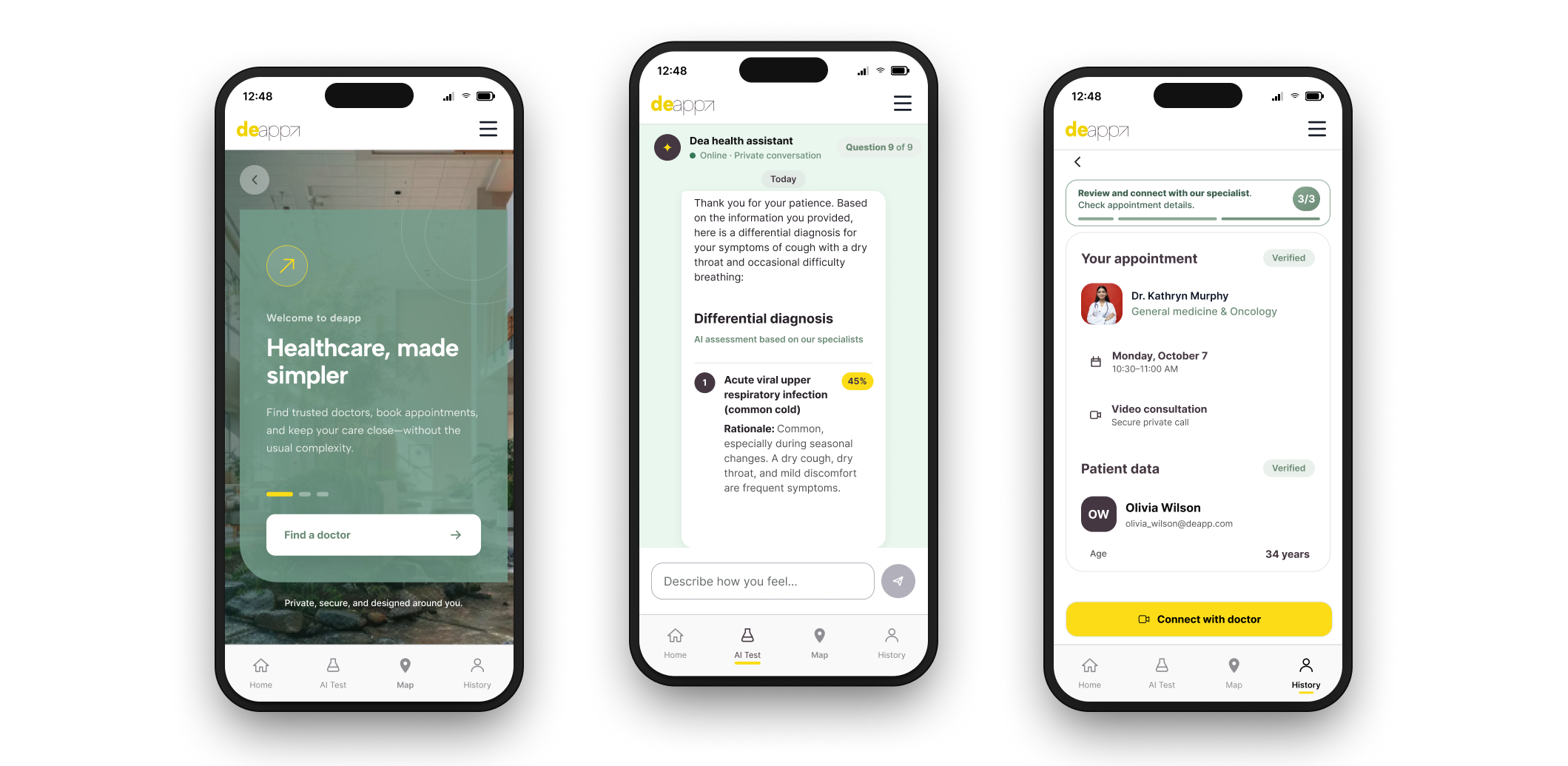
  • AI-assisted triage, integrating feedback from doctors and specialists.
landingpage-deapp-lets-start
describe-how-you-feel-test-AI
AI-assited-differential-diagnosis
AI-assited-unconfirmed-diagnosis-find-a doctor

3. Video consultation:


Proccess will be guided to find an specialist, here are three key strategies to drive conversion across both approaches:


  • Reduce cognitive load: Keep the screen focused on the action and assure. 
  • Transparency: Clearly explain reason to choose service. 
  • Benefits: Reinforce value words to generate trust and loyalty. 
 
onboarding

Map and geolocalization:


Use this moment to clearly explain the value users to connect with the best option according to schedule or proximity.


UX Best Practices


  • Geolocalization brings trust to the users with security to have an doctor in official medical center, it could be public or private near to them.
  •  Card would be offer usefull information guiding to the user about medical center, address, schedule availability.
  • Most importantly, the CTA sets the right expectation by making it clear that clicking the schedule prompts the user to get a specialist.
map-medical-center

Doctor list: A single, clearly framed verification steps reduces decision fatigue compared to go emergencies, queing, triage, invoice and payment. 

doctor-list-step1

Payment: For the optimal user experience assure words as easy, fast, and secure, generate trust. It wil present the options clearly and consistently, using UI patterns aligned with design system (for example, radio buttons, selection cards, highlighted defaults, or expandable accordions).

2-step-pay
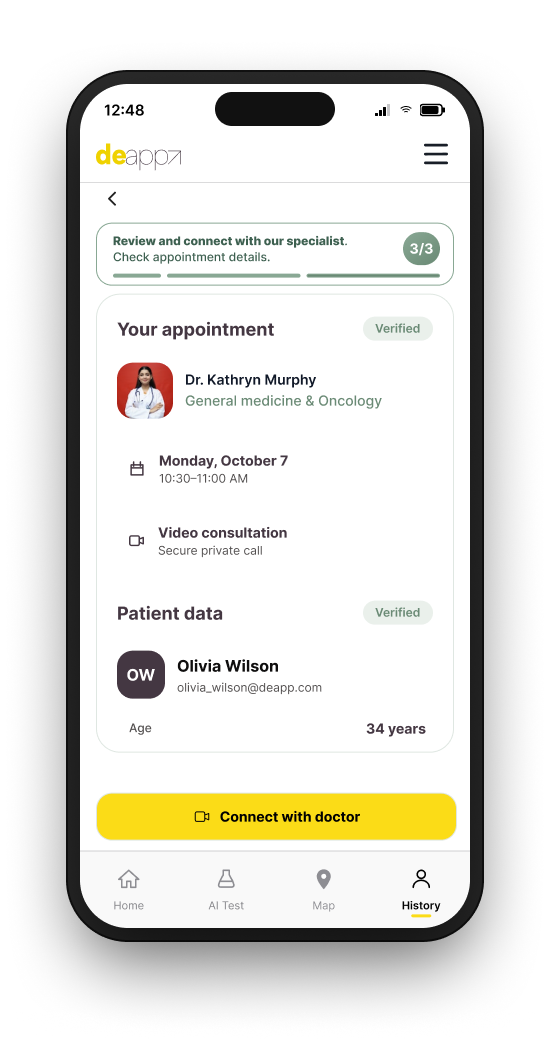
Designing the Online Consultation
connect-with-our-specialists

Challenges 

The development of a digital health solution  presented unique challenges that combined medical complexity, user sensitivity, and technical requirements.


1. Patient Journey Barriers

  • Lack of awareness: Many patients normalize affections or they aren’t aware of treatment options, delaying help-seeking.

  • Referral friction: Current processes are slow and fragmented, with primary care physicians and pharmacists lacking clear protocols to guide patients.

  • Private and personal: Privacy was the top user requirement (e.g., users rejected visible notifications).

  • AI in diagnosis: Validating algorithm accuracy for affections symptoms required close collaboration with specialists (minimum 85% confidence threshold).

  • Telemedicine integration: External providers had incompatible APIs, forcing the development of an interoperability layer.

  • Legal compliance: Storing sensitive health data demanded additional certifications (GDPR, HIPAA).

 
de-app